University of Opole: The Many Tales of Collegium Maius
As it is almost the holiday break, we have decided to quickly go over the history of one of the most famous university locations – the University of Opole’s Collegium Maius.
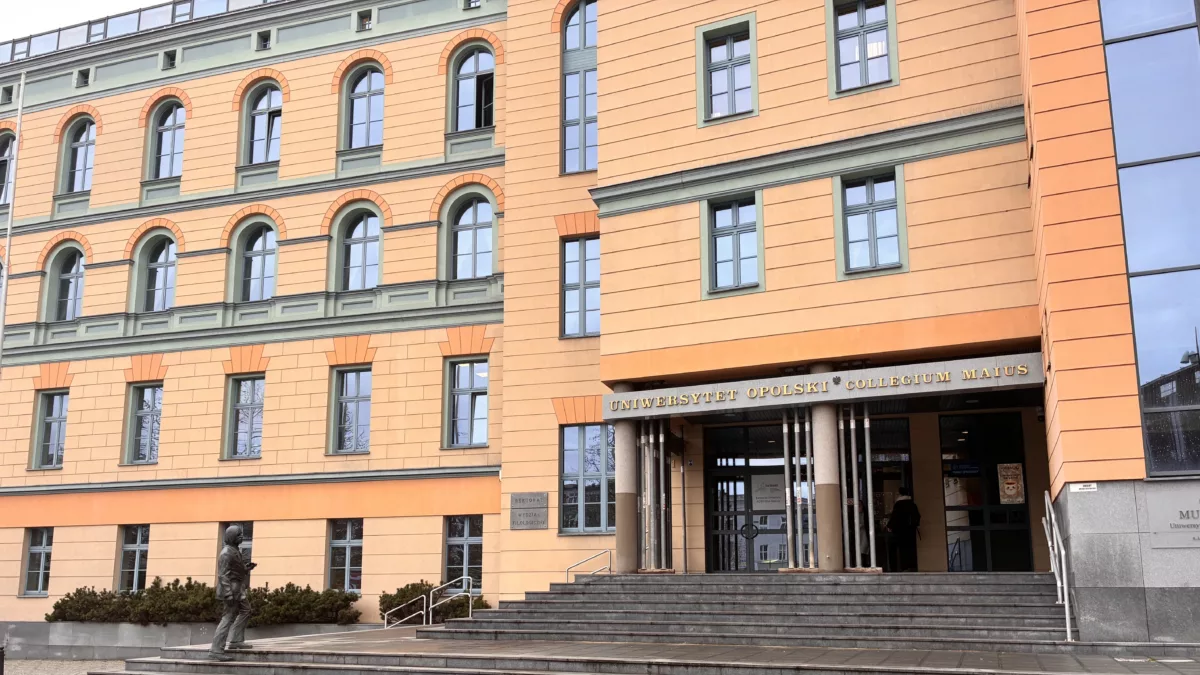
The Faculty of Philology is an interdisciplinary academic unit comprising five institutes. Most students of our university have been in its main building or seen it from the outside (while shopping at Solaris, at least once). The locale at Kopernik Square, as a locale built hundreds of years ago, has a history not many in Opole can beat. The Limestone Hill on which it was built – before a huge quarry was created in today’s city center – was once full of greenery, serving as grapevine plantations, while where the nearby mall now stands, used to be a brewery. All of that came to an end with the discovery of calcium deposits, the process of mining which killed the plants covering the area located highest above sea level in Opole.
The first mentions of a building located where today’s Collegium Maius stands come from 1254, being comments about the first wooden version of the church. Over time, around the 14th century, it turned into a brick structure, foreshadowing the birth of the modern CM. The history of the monastery is just as complicated as the history of the Dominican order in the area, which had to leave the city many times and often return to it. In the 19th century, a hospital was established here – initially Das Sankt Adalbert Hospital, and after World War II, the St. Adalbert Hospital, named in Polish. This is where most of the urban legends regarding our university’s tallest educational building come from.
For example, the strange elevator, which in the evenings – as CM employees say – tends to travel between floors for no reason. Alongside that, its inside temperature is almost always a few degrees lower than in the university corridors. Most of those thirsty or hungry while taking lectures have definitely been to the -1 floor, where the building’s vending machines are located. However, in the early days it would not be a place ending up at could be anyone’s dream – being first filled with rooms for those whom medicine could not keep in the world of the living.
The medical function persisted until the late 20th century, during which time the building’s interior was adapted to meet modern medical standards. However, by the 1990s, the structure had fallen into disrepair. In 1996, the University of Opole acquired the property, recognizing its potential to serve as a central hub for the institution. A comprehensive renovation and expansion project commenced in 1998, led by architects Krystyna and Andrzej Szczepańscy. This endeavor not only preserved the historical integrity of the building but also introduced modern architectural elements, including a glass-roofed auditorium on the top floor, offering panoramic views of the city.
One intriguing aspect is the building’s foundation. During renovations, it was discovered that the former monastery lacked traditional foundations, resting instead on clay and marl. This posed significant challenges, necessitating the removal of tons of material and the insertion of reinforced concrete supports to stabilize the structure. Additionally, the hill on which Collegium Maius stands also required inserting piles to prevent landslides, especially around the central pillar supporting the oldest floors, which had to be entirely rebuilt due to deterioration.
The building’s surroundings also contribute to its historical ambiance. The green areas around Collegium Maius serve as an open-air exhibition space, showcasing sculptures from various once prevalent palaces in the region. Notable pieces include Baroque representations of the four seasons by Heinrich Hartmann and a monumental sculpture of St. Christopher with Child from the palace in Kopice. These artworks enrich the cultural landscape and connect the university to the broader artistic heritage of the area.
Inside, the building retains elements of its monastic origins, such as the Dominican refectory adorned with Late Baroque paintings depicting the Holy Trinity, a guardian angel, and St. Michael the Archangel. These artworks offer a glimpse into the spiritual life of the former monastery and have been preserved as part of the university’s commitment to maintaining its historical integrity.
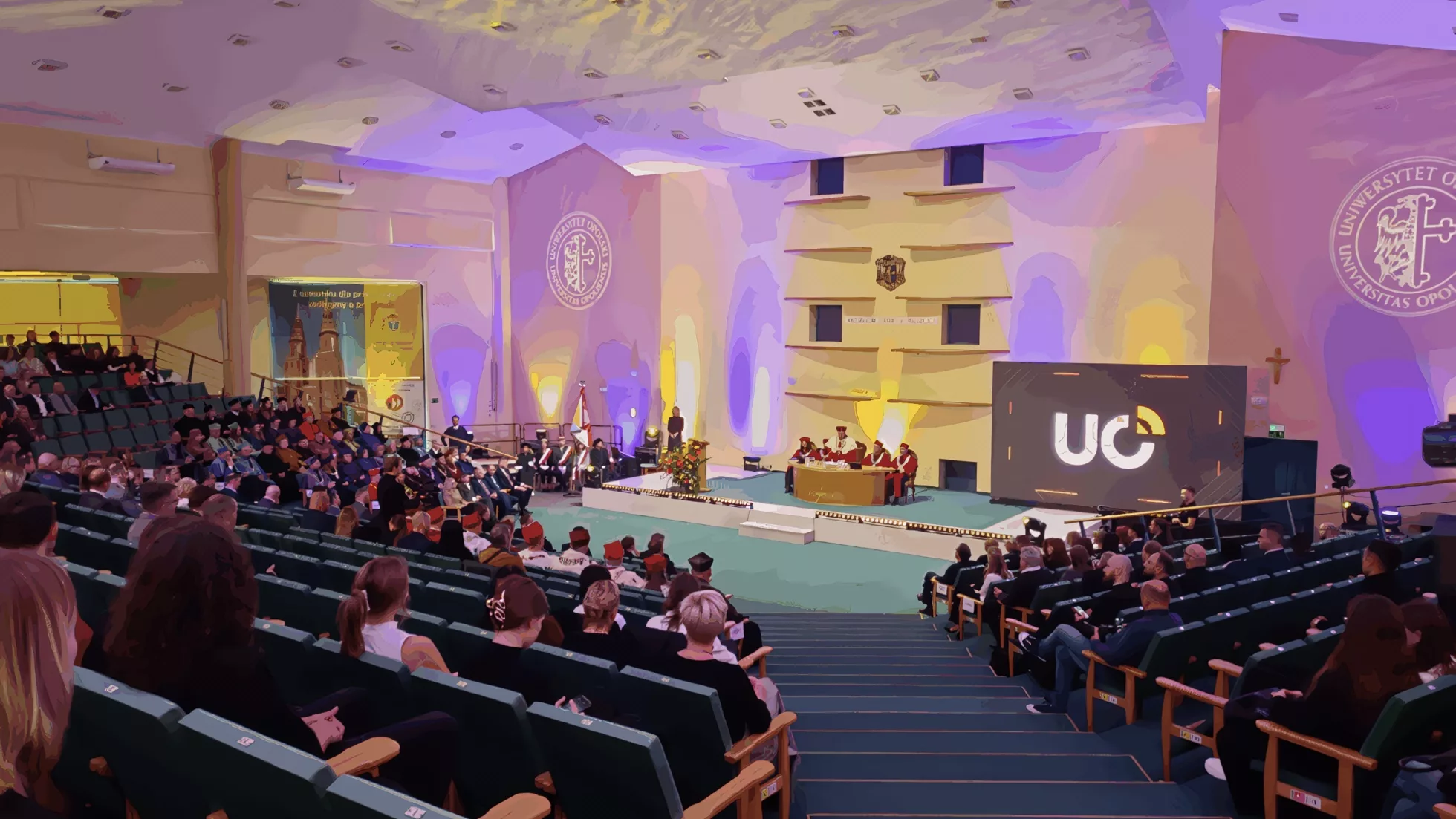
The aforementioned highest room on the highest floor – the Blue Auditorium – features the remnants of the original elevator shaft, which used to be in the noticeable tower on the front wall. This solution required placing the elevator entrance outside the hospital building. The now largest learning facility at the address was created during the conversion into a university building. When standing or sitting in the mini-park next to the statue of a pensive Agnieszka Osiecka, we can notice the tiny Collegium Minus building, which originally served as an orphanage and later a separate children’s hospital.
The respectable walls of Collegium Maius have changed quite a lot since the old hospital days, apart from leaving and entering the premises being still a life-changing experience. Today, Collegium Maius houses the rector’s office and various administrative departments of the University of Opole. Additionally, it is home to the Museum of the University of Opole, established in 2014 to commemorate the current variant of the institution’s 20th anniversary. The museum’s mission is to preserve documents and relics showing the history and contemporary days of the school, promoting knowledge about its history and academic disciplines through exhibitions and educational programs. While there are still unanswered questions and mysteries – like the prevalence of carpeted floors – we hope we have shed some light on this very interesting topic.
Sources:
Bogdoł, G., & Kraus, J. (2014, September). Serce Uniwersytetu. Opole z Sercem. https://www.opolezsercem.pl/2014/09/serce-uniwersytetu.html?m=1
Museum of the University of Opole. (n.d.). Association of University Museums. https://muzeauczelniane.pl/en/museum-ot-the-university-of-opole/
Nasze Collegium Maius. (n.d.). Nowa Trybuna Opolska. https://nto.pl/nasze-collegium-maius/ar/3953585
History of the University of Opole. (n.d.). University of Opole. https://uni.opole.pl/en/history-of-the-university-of-opole/
Klasztor, ob. Collegium Maius Uniwersytetu Opolskiego. (n.d.). Zabytek.pl. https://zabytek.pl/pl/obiekty/opole-budynek-klasztorny-d-szpital-ob-collegium-maius-uniwer
Since 2004, I have been expanding my wide range of interests - including writing, website creation, social media management, graphic design, voice acting, app and game development, pop culture research, music and video editing. My dream is to one day leave a positive mark on the world through my work, while having fun doing what I love.
View all posts by Benjamin Golletz